May 15-16, 2027
7 PM & 4 PM | Lensic
Season Finale: Verdi’s Requiem
The Santa Fe Symphony Orchestra
The Santa Fe Symphony Chorus
Guillermo Figueroa, Music Director
Carmen Flórez-Mansi, Choral Director
Lydia Katarina, Soprano
Zoie Reams, Mezzo-Soprano
Jonathan Burton, Tenor
Scott Conner, Bass
Program
VERDI
Requiem Mass
Runtime: Approx. 1 hour and 30 minutes, with no intermission.
FULL CONCERT UNDERWRITER
Ann Neuberger Aceves
CONCERT SPONSORS-IN-PART
Mary & John Macukas
Ralph Craviso

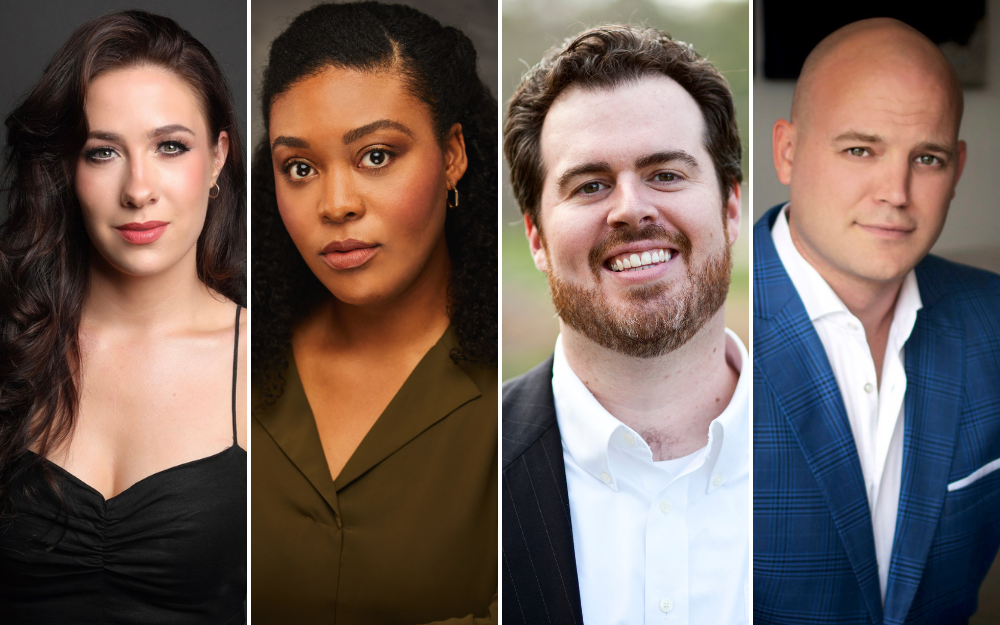
Guillermo Figueroa’s final concert as Music Director! Featuring The Santa Fe Symphony Chorus and a quartet of familiar voices from the world of opera, this powerful piece is a journey through many emotions, leading to the resolution of a found peace. The profound work about life and loss will leave you breathless as The Santa Fe Symphony Orchestra and Chorus closes our 43rd Season!
A native of Tijeras, New Mexico, soprano Lydia Katarina is a graduate of the Academy of Vocal Arts (AVA) in Philadelphia, and was a 2024 Grand Finals Winner of The Metropolitan Opera Laffont Competition.
Praised for her “high-octane emotionalism”, Ms. Katarina begins the 2025-2026 season with her European, house and role debut as Léonore in Le trouvère at Wexford Festival Opera. She makes role debuts as Micaëla in Carmen (San Diego Opera, house debut) and Violetta in La traviata (Utah Opera), and adds the role of Roxana in a new production of Szymanowski’s masterpiece King Roger at Des Moines Metro Opera (house debut). In concert, she joins the Columbus Symphony for Mozart’s Requiem.
The 2024-2025 season included three role and company debuts: Palm Beach Opera (Juliette in Roméo et Juliette), Utah Opera (Nedda in Pagliacci), and The Glimmerglass Festival (Anne Trulove in The Rake’s Progress). Lydia made house debuts in the 23-24 season with Arizona Opera and Merola Opera as Donna Anna in Don Giovanni and Opera Columbus as Tatiana in Eugene Onegin. She was a 2023 Apprentice Artist at the Santa Fe Opera, where she made her company debut as the Second Wood Sprite, in addition to covering the title role, in Dvořák’s Rusalka. Lydia has won several prestigious competions, including The Loren L. Zachary Society Competition, the Gerda Lissner Foundation Competition, as well as the top prize in AVA’s Giargiari Bel Canto Competition.
Hailed by Opera News for her “velvety mezzo”, Zoie Reams is a graduate of the prestigious Houston Grand Opera Butler Studio.
The 2025-2026 season features Ms. Reams with the Lyric Opera of Chicago twice, first in the newly commissioned A Night of Mellon Collie and Infinite Sadness and in a return to Neris in David MacVicar’s production of Medea. Elsewhere features a return to Canadian Opera Company as Maddalena (Rigoletto), performances as Carmen with Piedmont Opera, and singing Zipporah in Kevin Day and Tifara Brown’s Lalovavi (world premiere) at Cincinnati Opera. In concert, she performs as Siegrune in Die Walküre (Act III) with the LA Phil (Gustavo Dudamel); Beethoven’s 9th Symphony (Boston Symphony Orchestra); her first performances of Mahler’s 2nd Symphony (Northwest Florida Symphony); Handel’s Messiah (Washington National Cathedral); and Austin Opera for their 40th anniversary concert.
In 2024-2025, she returned to the Lyric Opera of Chicago first as Maddalena (Rigoletto), and later as Mother in Tesori/Thompson’s Blue. With the LA Phil and Performing Arts Houston, she joined Solange Knowles’ Eldorado Ballroom, singing Julia Perry’s Stabat Mater. She joined The Metropolitan Opera to cover Charmian in John Adams’ Antony and Cleopatra.
Tenor Jonathan Burton is celebrated for his “heroic” and “clarion” performances in a range of dramatic roles. The 2025-2026 season sees performances at Santa Fe Opera as Pinkerton in Madama Butterfly; Canio in Pagliacci with San Diego Opera; Radamès in Aida with Virginia Opera; Manrico in Il trovatore with North Carolina Opera, and Dick Johnson in La fanciulla del West with Nashville Opera. In concert, he joins Austin Opera for their 40th Anniversary Concerts. Burton makes his Metropolitan Opera debut next season as Malcolm in a new, season-opening production of Verdi’s Macbeth.
During the 2024-2025 season, Burton performed both Cavaradossi in Tosca and Canio at Pittsburgh Opera, as well as Canio with Utah Opera. He returned to Washington National Opera as Steve Wozniak in The (R)evolution of Steve Jobs. Mr. Burton sang Verdi’s Requiem at the Cincinnati May Festival, bowed in Britten’s War Requiem with the Columbus Symphony and performed Canio with the Opera Festival of Chicago.
Career highlights include: Cavaradossi with Santa Fe Opera; Rodolfo in Luisa Miller for Lyric Opera of Chicago; Bacchus in Ariadne auf Naxos at Austin Opera; Paul in Die Tote Stadt at Opera Colorado; Hermann in Pique Dame for Des Moines Metro Opera; Don José in Carmen for Palm Beach Opera; Pollione in Norma with Utah Opera; Florestan in Fidelio with Kentucky Opera; des Grieux in Manon Lescaut at North Carolina Opera; the Prince in Rusalka and Manrico at Pittsburgh Opera; Canio with Opera San Antonio and Utah Opera; and Calaf with Washington National Opera, Austin Opera, Opera Colorado, and Utah Opera.
A Kansas native, Scott Conner has been lauded by critics and audiences for his appearances on both sides of the Atlantic. He is a graduate of the Academy of Vocal Arts and a Sara Tucker grant winner from the Richard Tucker Foundation.
A regular with The Metropolitan Opera, Scott Conner’s 2025-2026 season features his house role debut singing Zuniga in Carmen, Aldeano Three in El último sueño de Frida y Diego and covering Colline in La bohème. He makes his stage debut with Lyric Opera of Chicago as the First Soldier in Salome. Future seasons will include his return to The Metropolitan Opera.
Recent season highlights include: The Metropolitan Opera for a performance of Colline in La bohème, the One-Armed Brother in Die Frau ohne Schatten, 2nd Armored Man in The Magic Flute, and Jose Tripaldi in Ainadamar; Ramfis in Aida with Arizona Opera; the Police Commissioner in Der Rosenkavalier, Mustafa in L’italiana in Algeri and Pistola in Falstaff at Santa Fe Opera; San Francisco Opera as Tom in Un ballo in maschera, Colline and Angelotti in Tosca, and with San Diego Opera, Escamillo in Carmen.
Mr. Conner was the recipient of the 1st Prize Award in the Gerda Lissner Vocal Competition and the Loren L. Zachary Vocal Competition. Conner attended the University of Missouri, Kansas City for his Bachelor of Music degree.
No one would have expected the aging opera composer Giuseppe Verdi to write a Requiem Mass, and it came about only because of the death of two very different men. The first was Rossini, who died in Paris in November 1868. Rossini and Verdi may have written different kinds of operas, but Verdi felt only veneration for his older colleague, describing him as “a real man, a fine artist who left his stamp on a whole epoch.” Verdi proposed that he and a group of colleagues write a joint setting of the mass in Rossini’s memory, and he promptly composed a setting of the Libera me as his own contribution. But the project collapsed as a result of bickering among the participants and sponsors, and the disillusioned Verdi put his manuscript on the shelf.
In 1873, poet, playwright, and novelist Allessandro Manzoni died at the age of 88. He was a devout Catholic who believed in the workings of divine providence in daily life, a view expressed in his most famous work, I promessi sposi, a morality novel about the struggle of the peasants Renzo and Lucia to marry in 17th-century Lombardy. Verdi loved the novel and wrote to a friend: “You know well how greatly and in what way I honor him. In my opinion he has written a book, which is not only the greatest product of our times, but also one of the finest in all ages which has emanated from the human brain. And, besides being a book, it is a comfort to humanity as well.” When Manzoni died, Verdi wrote to his publisher: “I am moved to the depths by the passing of this great man who belonged to us. I shall not go to Milan tomorrow; I could not bear to be present at the funeral. I shall come later to find the grave, alone and unseen. I may have a proposal to make to you as to how his memory should be honored.”
That proposal was that Verdi would compose a Requiem Mass in honor of Manzoni. He pulled out the Libera me movement written four years earlier in memory of Rossini and quickly composed the rest of the setting, completing the manuscript while on a visit to Paris. Verdi led the triumphant first performance in the Church of San Marco in Milan on May 22,1874, one year to the day after Manzoni’s death, and then conducted performances in London, Paris, Vienna, and Cologne.
Although Manzoni had been a devout Catholic, Verdi was not a believer, and he hated the church and its priests, associating them with privilege, hypocrisy, and oppression. But he believed in the Christian ideals so important to Manzoni even if he could not accept the dogma behind them, and did not see it as a contradiction to use religious text.
A century and a half earlier, the civic authorities in Leipzig had instructed their new music director, Johann Sebastian Bach, to “so arrange the music that it . . . does not make an operatic impression but rather incite the listeners to devotion.” Verdi would have ignored that command because for him there was no contradiction between “an operatic impression” and inciting “listeners to devotion.” When the conductor Hans von Bülow described the Requiem as Verdi’s “latest opera in church vestments,” he was not far off the mark. In this setting, Verdi used the musical language that had made his operas so effective: gripping and memorable melodies, solo and ensemble writing, a large chorus often employed in dramatic ways, and a virtuoso orchestra. Bach’s employers in Leipzig would have been appalled by the Verdi Requiem, but today we regard it as perhaps the greatest of all settings of this solemn text.
If Verdi conceived of the requiem text as essentially dramatic, it’s no surprise that he made the most dramatic of its sections, the Dies Irae, the central episode of his setting: His vision of the Day of Wrath stretches out to nearly 40 minutes, or almost half the entire length of the piece. The opening Kyrie virtually whispers its prayer for eternal rest, but the Dies Irae explodes with some of the most violent music ever composed: Its doom-laden drumcracks result from Verdi’s instruction to stretch the skin of the bass drum as tightly as possible. The ten individual sections that make up the Dies Irae are too richly varied to describe in detail, but mention should be made of the bass’ numb introduction of death at Mors stupebit, the mezzo’s declamatory Liber scriptus, the swagger of the trombones at Rex tremendae majestatis, and the tenor’s soaring Ingemisco, with its important oboe solo.
The remaining movements, all sharply contrasted, pass more quickly. The Offertorio features the four soloists, while the brief Sanctus is a blazing fugue for double chorus. The Agnus Dei’s spare yet imaginative scoring has the two women soloists in octaves, while the Lux Aeterna uses soloists in various combinations.
The concluding Libera me is the movement Verdi had composed for the projected setting in memory of Rossini, and listeners will discover that this “final” movement contains many ideas that Verdi would develop when he set the complete text. It opens with the soprano’s urgent prayer, and Verdi then re-invokes the furies of the Dies Irae and also the subdued plea of the opening Requiem before the movement erupts in a tremendous fugue on the words Libera me, Domine, de morte aeterna: “Deliver me, Lord, from eternal death.” Here is the “operatic” Verdi at his grandest and most dramatic, and at the close of the fugue the soprano soloist draws down tensions to the conclusion, where she and the chorus almost whisper the final prayer for deliverance: Libera me.